Sri Lanka's 8 UNESCO World Heritage Sites — What Each One Is Really Like (and How to See Them All)
For an island you can drive across in a day, Sri Lanka holds a surprising amount of world history. UNESCO lists eight places here as World Heritage Sites — six for their culture and two for their nature — and they sit close enough together that you can see every one of them in under two weeks.
The catch is that most visitors only see two or three. They climb Sigiriya, visit the Temple of the Tooth, have dinner in Galle Fort and fly home without knowing that a thousand-year-old capital or one of Asia's richest rainforests was a couple of hours away.
This guide walks through all eight: what each place is, what it actually feels like to visit, and the small things our guides tell guests on the day.
The Eight Sites at a Glance
Cultural sites
- Sacred City of Anuradhapura
- Ancient City of Polonnaruwa
- Ancient City of Sigiriya
- Rangiri Dambulla Cave Temple
- Sacred City of Kandy
- Old Town of Galle and its Fortifications
Natural sites
- Sinharaja Forest Reserve
- Central Highlands of Sri Lanka (Peak Wilderness, Horton Plains and the Knuckles Conservation Forest)
The first five sit in or near the Cultural Triangle in the north-central dry zone. The Central Highlands run through tea country, and Sinharaja and Galle are in the wet south-west. That geography gives you a natural route: start in the north, work south through the hills, and finish on the coast.
1. Anuradhapura — Where It All Began
Anuradhapura was Sri Lanka's capital for well over a thousand years, and it still feels less like a ruin than a living pilgrimage town. Huge white stupas rise over the trees, ancient reservoirs reflect the sky, and families in white walk barefoot between the shrines.
Don't miss:
- Sri Jaya Sri Maha Bodhi — a sacred fig tree grown from a cutting of the tree under which the Buddha is said to have reached enlightenment, brought here in the 3rd century BC. It is widely described as the oldest human-planted tree with a recorded history.
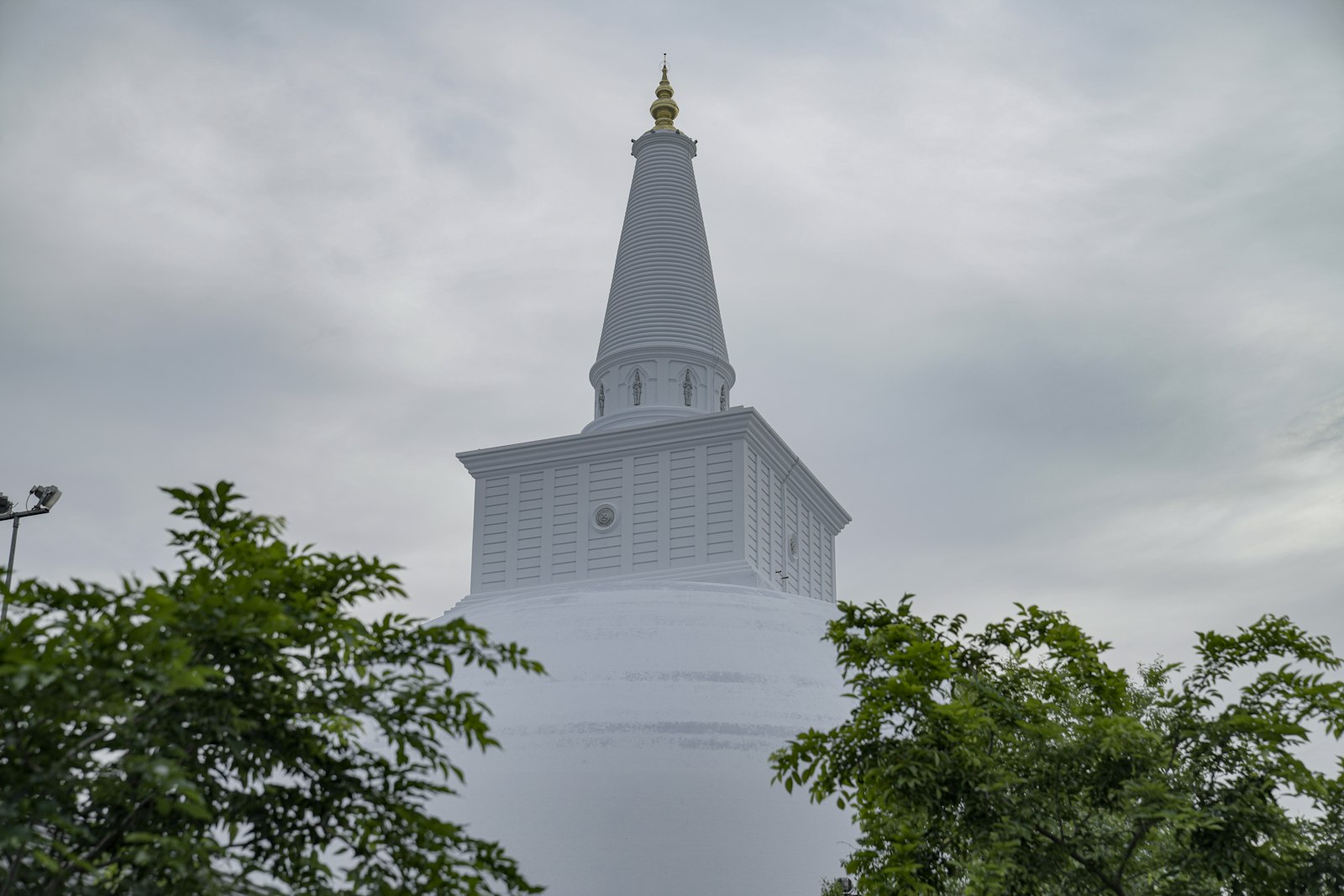
- Ruwanwelisaya — the brilliant white stupa ringed by a wall of carved elephants. Come back in the evening, when the lamps are lit and the chanting begins.
- Jetavanaramaya — a vast brick stupa that was once among the tallest structures in the ancient world.
Our tip: the site is spread out over many kilometres. Seeing it by bicycle, with your guide leading the way, is the most enjoyable way to link the monuments and feel the scale of the old city. Wear white if you can — it's appreciated at the sacred tree.
2. Polonnaruwa — The Medieval Capital
When Anuradhapura fell, the kings moved south-east to Polonnaruwa. It's younger, more compact and easier to understand, which makes it many people's favourite of the ancient cities.
Don't miss:
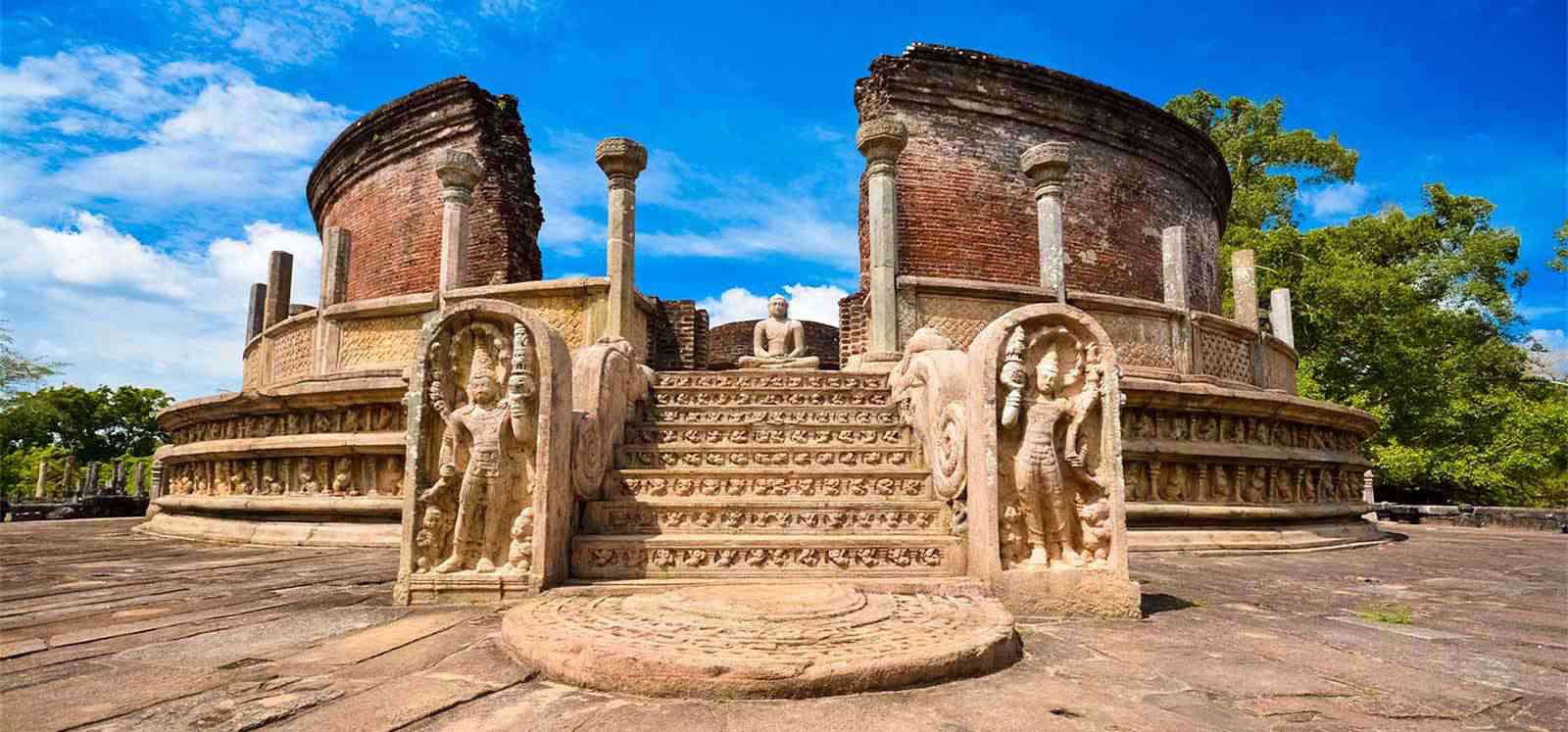
- The Quadrangle — a cluster of temples on a raised terrace, including the circular Vatadage with its moonstone steps and seated Buddhas.
- Gal Vihara — four Buddha figures carved from a single granite face in the 12th century, including a reclining Buddha around 14 metres long. Quiet, simple and genuinely moving.
- Parakrama Samudra — a huge ancient reservoir that still waters the rice fields today.
Our tip: go early in the morning. By midday the stone is hot underfoot, and you remove your shoes at every shrine. Thin socks help a lot.
3. Sigiriya — The Palace on the Rock
Sigiriya is the one everyone has seen in photos: a sheer rock column rising about 200 metres from the plain, with the remains of a 5th-century royal palace on top. What the photos don't show is everything around the rock — symmetrical water gardens, boulder gardens and moats laid out with remarkable precision.
The climb takes you past the famous painted "cloud maidens", along the polished Mirror Wall covered in ancient graffiti, and up between two giant stone lion's paws for the final stairs to the summit.
Our tip: be at the gate when it opens. You'll climb in the cool air and get the top before the tour groups. The steps are steep in places but well railed; if heights bother you, the gardens and lower terraces are worth the visit alone. For a different view, climb neighbouring Pidurangala Rock at sunset and look back at Sigiriya.
4. Dambulla Cave Temple — Two Thousand Years of Devotion
Above the town of Dambulla, a granite outcrop holds five cave shrines that monks have used for more than two thousand years. Inside, more than 150 Buddha statues sit beneath ceilings covered edge to edge in painted murals. Light comes in from the doorways, and the effect of walking from bright sun into these painted rooms is hard to describe.
Our tip: there's a short but steady climb up the rock. Go in the late afternoon when it's cooler and the light is softer, and leave hats and shoes at the entrance. Flash photography isn't allowed inside the caves.
5. Kandy — The Sacred City
Kandy was the last capital of the Sinhalese kings before the British took control in 1815, and it's home to the Temple of the Sacred Tooth Relic (Sri Dalada Maligawa), the most important Buddhist shrine in the country.
Visit during one of the daily puja ceremonies, when drummers play, offerings of flowers pile up and pilgrims queue to glimpse the golden casket that holds the relic. Outside, the lake, the old town and the hills around it make Kandy a pleasant place to spend two nights rather than one.
Our tip: shoulders and knees must be covered — a sarong or a light scarf in your bag solves this anywhere in Sri Lanka. If you travel in July or August, ask us about the Kandy Esala Perahera, the island's greatest festival.
6. The Central Highlands — Cloud Forest and World's End
This natural site is made up of three protected areas: Peak Wilderness (home to Adam's Peak), Horton Plains National Park and the Knuckles Conservation Forest. Together they protect the high forests and grasslands where many of Sri Lanka's endemic plants and animals live.
Most visitors come for Horton Plains, a windswept plateau where a loop walk of about 9 km leads to World's End, a cliff edge that drops away towards the lowlands, and to the broad curtain of Baker's Falls. The Knuckles Range near Kandy is wilder and far quieter, with trails through cloud forest and small villages.
Our tip: at Horton Plains, the clouds usually roll in by mid-morning and can hide the view completely. Arrive when the park opens, bring a warm layer (it's genuinely cold at dawn), and carry water — there are no shops along the trail. Combine it with the hill-country train journey for one of the best days in the hills.
7. Sinharaja — The Last Great Rainforest
Sinharaja protects the largest remaining stretch of primary lowland rainforest in Sri Lanka. Step inside and the light turns green, the air turns heavy and the sound changes completely. A high share of its trees, birds, frogs and insects are found nowhere else on Earth.
The highlight for many visitors is the famous mixed-species bird flocks — dozens of birds of different kinds moving through the canopy together, often including the brilliantly coloured Sri Lanka blue magpie.
Our tip: go with a local naturalist; they will spot ten things for every one you notice. Wear long trousers and leech socks (your lodge can usually lend them), and expect rain at some point, whatever the season. If birds are your thing, see our beginner's birdwatching guide.
8. Galle Fort — A Living Old Town
Galle's fort was begun by the Portuguese in the 16th century and rebuilt and greatly strengthened by the Dutch in the 17th. What makes it special is that it isn't a museum: people still live, work, worship and go to school inside the walls.
Walk the ramparts to the lighthouse, look into the old Dutch church, wander lanes of colonial houses turned cafés and boutiques, and stay for sunset on the walls, when half the town comes out to watch.
Our tip: the fort is at its best early in the morning and in the last two hours of daylight. Spend the night nearby if you can — day-trippers leave and the streets go quiet. Our south coast hidden gems guide has ideas for the days after.
The Order We'd Visit Them In
Here is the route our guides like best, because it avoids doubling back and puts the cooler hill days in the middle of the trip:
- Anuradhapura (1 night)
- Dambulla, Polonnaruwa and Sigiriya from one base (3 nights)
- Kandy and the Knuckles (2 nights)
- Nuwara Eliya and Horton Plains (1 night, arriving by train)
- Sinharaja (2 nights)
- Galle (1 night), then the airport
That's a comfortable 12 days with one night in Negombo on arrival. We've turned it into a ready-made private tour — UNESCO World Heritage Sri Lanka — which you can shorten, extend or mix with beach days. Short on time? Our Cultural Heritage Tour covers the ancient cities and Kandy in eight days.
Practical Tips for Heritage Days
- Dress for temples. Covered shoulders and knees, shoes and hats off at shrines. Never pose with your back to a Buddha statue.
- Start early. The dry zone gets very hot by late morning. Ancient cities first thing; pool or rest after lunch.
- Carry socks. Stone and sand get hot underfoot at barefoot sites.
- Buy tickets on the day. Each major site sells its own ticket at the entrance; your guide will handle the queue.
- Hire a guide inside the sites. The stories make the stones come alive. Our chauffeur-guides can arrange licensed site guides where they're needed.
- Time the weather. The Cultural Triangle is driest from about May to September, while the south-west coast and hills are usually at their best from December to April. Read our best time to visit guide to plan around both.
For more on the ancient cities alone, see our Cultural Triangle guide.
Plan Your Heritage Tour With Us
Seeing all eight World Heritage Sites is one of the most rewarding ways to understand Sri Lanka — from its earliest kings to its colonial ports and the forests that were here long before any of them.
Contact us and tell us how many days you have and what interests you most. We'll shape the route, the hotels and the pace around you.