
Your First Jeep Safari in Sri Lanka — An Honest Guide to What Really Happens
Picture this: the jeep rolls to a stop, the engine goes quiet, and your tracker points at a patch of shade under a palu tree. For a few seconds you see nothing. Then a tail flicks — and a leopard you'd have driven straight past lifts its head and looks right back at you.
That's the magic of a jeep safari in Sri Lanka. It's also only half the story. Plenty of drives are slower, dustier and less dramatic than the brochures suggest, and knowing that in advance is exactly what makes the good moments so rewarding. Here's what our guests usually experience, from the first bumpy kilometre to the drive home.
How a Sri Lankan Safari Actually Works
Safaris here run in open-top 4x4 jeeps with raised seats, built for sandy tracks, mud and the occasional shallow river crossing. Most hold up to six people, though everyone gets a better view with four.
There's no set route. Your driver reads the park as you go — fresh tracks in the sand, alarm calls from monkeys or deer, a radio tip from another vehicle — and adjusts on the spot. One drive might be dominated by a single elephant family. Another might give you crocodiles, a mongoose, a crested serpent eagle and a peacock in full display, all within twenty minutes.
You stay inside the jeep the whole time (park rules, and for good reason), so the main physical demand is holding on when the track gets rough.
Picking the Right Park for You
Sri Lanka packs a remarkable number of national parks into a small island, and each one has a different character. Choose based on what you most want to see.
Yala — for leopards and variety
Yala, on the south-east coast, has one of the highest leopard densities in the world, and it's the park most first-timers ask about. Alongside leopards you'll find elephants, sloth bears, water buffalo, crocodiles and huge numbers of birds, set against lagoons, rocky outcrops and scrub jungle.
A word of honesty: no one can guarantee a leopard, and anyone who does is overselling. Yala is also the busiest park, so timing and a thoughtful driver matter. Note that the main section usually closes for a few weeks around September to early October during the dry spell. Our Yala safari camps guide covers where to stay nearby.
Udawalawe — for almost-certain elephants
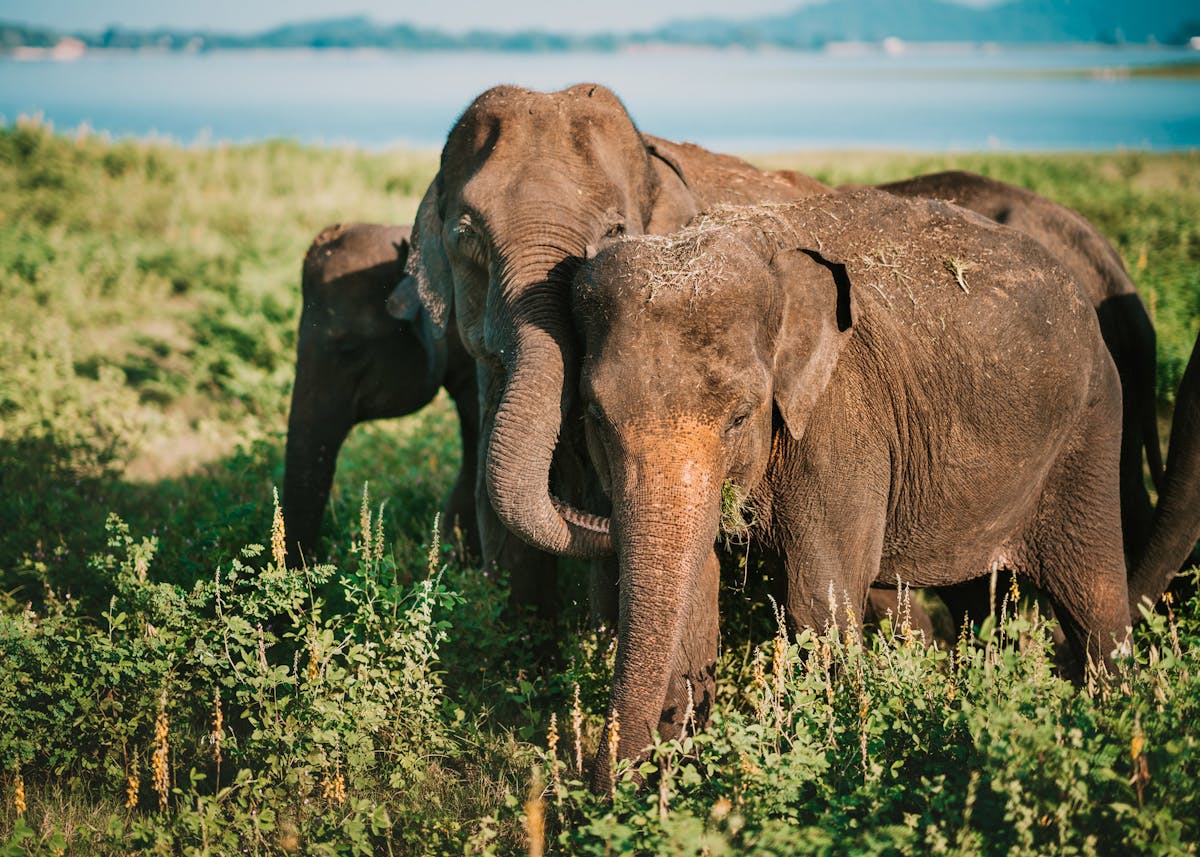
If elephants top your list, Udawalawe is the safest bet on the island. The open grassland around the reservoir makes herds easy to see, often including small calves sticking close to their mothers. It's a brilliant choice for families and for anyone on a shorter trip, since it sits conveniently between the hill country and the south coast.
Minneriya and Kaudulla — for "The Gathering"
From roughly July to September, as water elsewhere dries up, elephants move towards the ancient Minneriya tank in astonishing numbers — sometimes a few hundred in one place. Locals call it The Gathering, and it's one of Asia's great wildlife sights. Neighbouring Kaudulla often takes over when the herds shift, so a good driver will know which park to choose on the day. Both are easy to add to a Sigiriya or Cultural Triangle stay.
Wilpattu — for quiet and atmosphere
Sri Lanka's largest park, in the north-west, sees far fewer visitors. Its natural lakes (called villu) and thick forest give it a hushed, remote feel. Leopards live here too, along with sloth bears and elephants, but sightings take more patience. If you dislike crowds, Wilpattu is worth the longer drive.
Morning or Afternoon?
Animals are most active when it's cool, so drives run in two windows:
- Early morning — you'll typically leave your hotel around 5:00–5:30am and enter at opening. The light is soft, the air is cool, and the park wakes up around you. This is our pick for leopards and photography.
- Afternoon — usually from about 2:30pm until the park closes around dusk. It's warmer at first, but the late golden light and the drive out at sunset are hard to beat.
- Full day — for serious wildlife lovers, a full day with a packed lunch inside the park gives you the best odds and the quietest hours.
Setting Realistic Expectations
This is wild country, not a zoo, and nothing runs on a timetable. Two jeeps can enter Yala ten minutes apart and have completely different days. You may wait half an hour beside a bush where a leopard was last seen — and drive away without it. You may also round a corner into a sloth bear you never expected.
A few things to keep in mind:
- Tracks are rough. The parks keep roads natural to protect the habitat, so expect bumps, dust and, after rain, mud.
- Patience pays. Some of the best encounters come after sitting still with the engine off.
- Look beyond the "big" animals. Kingfishers, bee-eaters, monitor lizards, jackals and langurs make every drive worthwhile.
Go in curious rather than with a checklist, and you'll almost always come back happy.
Why Your Driver Matters So Much
A great safari driver can turn an average drive into an unforgettable one. The best know every waterhole and track, recognise animal behaviour, and understand when the right move is to hold back rather than push closer.
Just as important is restraint. If an animal looks stressed, a responsible driver gives it space, even if it means losing the photo. And when an elephant decides to stand in the middle of the track, the correct response is to switch off, wait and enjoy the moment — not inch forward.
We work with safari drivers we know personally and brief them on what each guest hopes to see, so you're never just a seat in a random jeep.
What to Wear
- Light, breathable clothes in neutral tones — khaki, olive, beige or grey (skip bright colours and white)
- A wide-brimmed hat and sunglasses
- A light jacket or fleece for early mornings, which can feel surprisingly cool in an open jeep
- Comfortable closed shoes or sturdy sandals
- A scarf or buff to keep dust off your face
What to Bring
- Plenty of water (and a reusable bottle)
- Sunscreen and insect repellent
- Binoculars — honestly the most underrated safari item
- A camera with a zoom lens if you have one; a phone works fine for wide shots
- A small bag for snacks and any rubbish, since nothing should be left in the park
For a fuller list, see our Sri Lanka packing guide and our wider Sri Lanka safari guide.
Safari Etiquette: Leave Only Tyre Tracks
The parks are home first and attraction second. A few simple habits keep it that way:
- Keep your voice low and never call out to animals
- Stay seated and inside the vehicle
- Don't feed any wildlife, ever
- Avoid joining a pile-up of jeeps around one animal — it causes real stress
- Take every scrap of rubbish out with you
The best sighting isn't always the closest one. Often it's the one where the animal carries on as if you weren't there at all. If you love elephants in particular, our post on ethical elephant encounters explains how to see them the right way.
Plan Your Safari With Us
Whether you're a keen photographer, a couple after a wild sunrise, or parents wanting to show the kids their first elephant, a jeep safari is one of the most memorable things you can do in Sri Lanka. Our Wilderness Safari Adventure combines Yala and Udawalawe, and we can add a safari to almost any itinerary.
Contact us and tell us what you'd love to see — we'll match you with the right park, the right season and the right driver.