About Sigiriya Rock Fortress
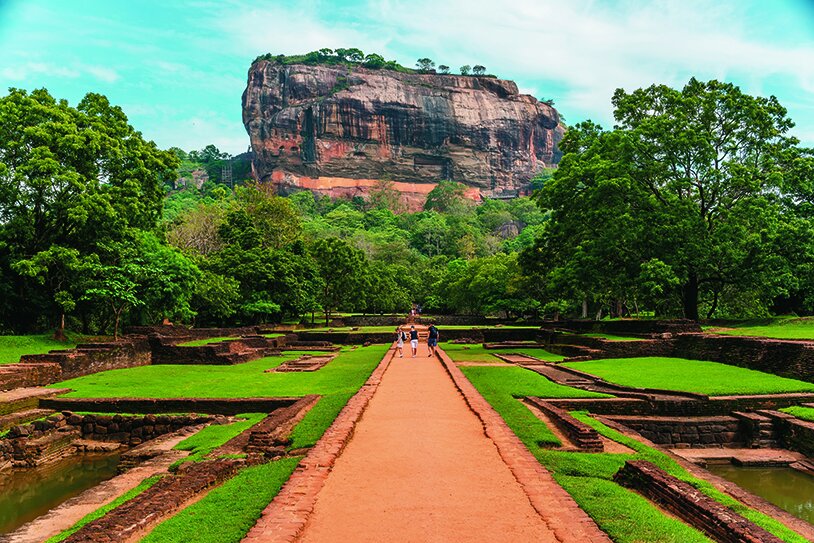
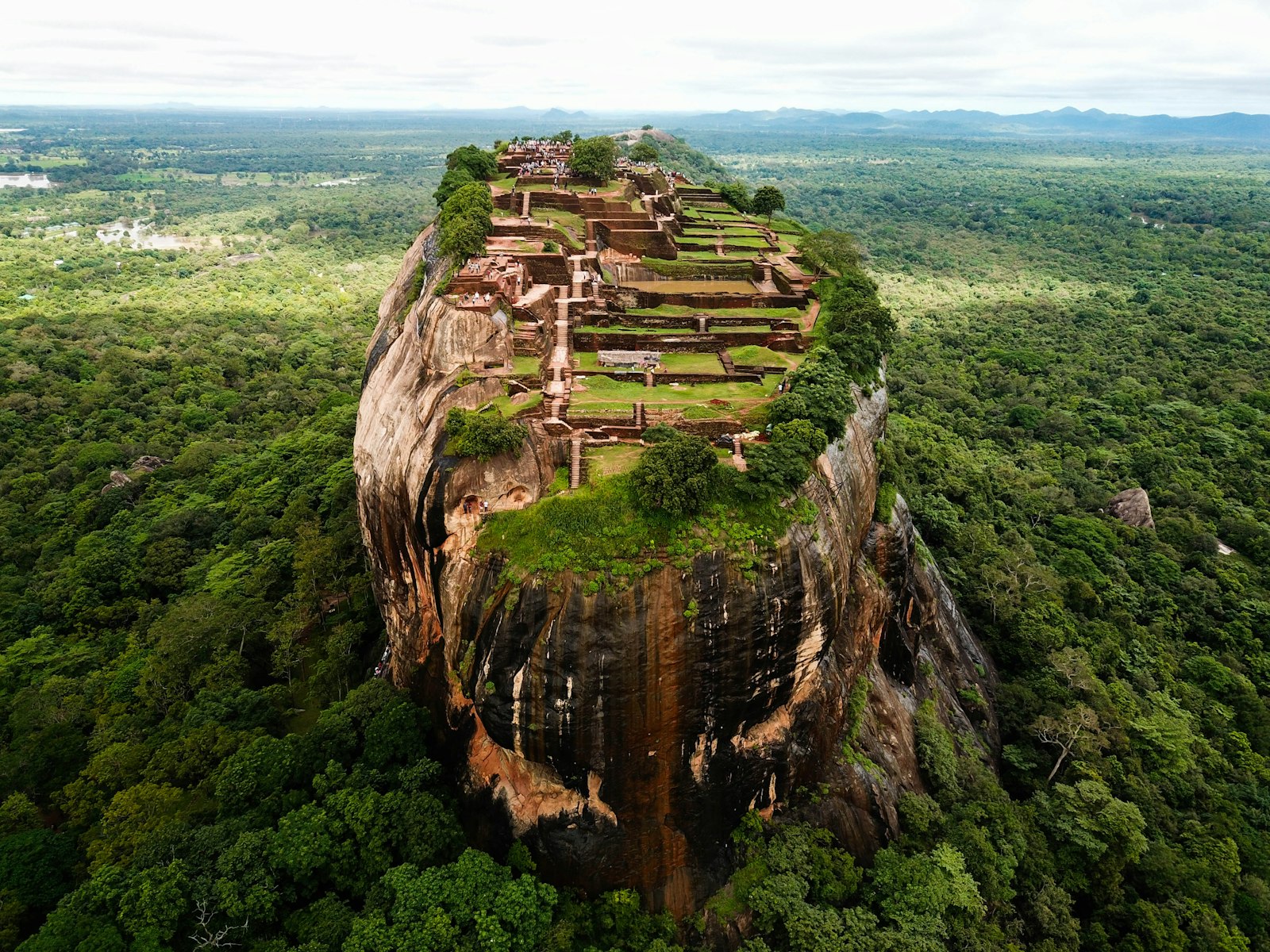
Sigiriya is an ancient rock fortress located in the northern Matale District. The name refers to a site of historical and archaeological significance dominated by a massive column of rock approximately 180 meters high. According to the ancient Sri Lankan chronicle the Culavamsa, this site was selected by King Kashyapa for his new capital. He built his palace on top of this rock and decorated its sides with colorful frescoes. A mid-5th century fortress and palace complex, Sigiriya is recognized as one of the finest examples of ancient urban planning.
Highlights
- 5th century rock fortress and palace ruins
- UNESCO World Heritage Site
- Ancient frescoes of the 'Sigiriya Maidens'
- Mirror Wall with ancient graffiti
- Landscaped royal gardens with water features
What you will see on the way up
The visit starts long before the rock itself. You walk in through the royal water gardens, with symmetrical pools, fountains and moats that still fill with water in the rainy season. They are among the oldest landscaped gardens in Asia. Next come the boulder gardens, where huge natural rocks were turned into terraces and shrines.
Halfway up, a spiral staircase leads to the famous frescoes of the Sigiriya maidens, painted around 1,500 years ago and still bright with colour. Just after them is the Mirror Wall, once polished so smooth the king could see his reflection, and later covered with poems scratched by visitors from the 8th century onwards.
On the Lion Platform you pass between two giant stone paws — all that remains of the lion's head that once formed the entrance. The last section is a steep metal stairway up the rock face to the summit, where the foundations of the palace, a large rock-cut pool and views across the forest to Pidurangala reward the effort.
The story behind Lion Rock
According to the ancient chronicle, King Kashyapa seized the throne from his father in the 5th century and moved the capital to this rock, fearing revenge from his half-brother. He turned it into a fortified palace city in just a few years. After his defeat, the palace was abandoned and the site became a Buddhist monastery until the 14th century. British explorers rediscovered it in the 1800s, and today it is Sri Lanka's best-known landmark.
Tips for climbing Sigiriya
Start early. The gates open in the early morning and the first hour is the coolest and quietest; by late morning the rock can feel like an oven and the stairways queue up. Bring at least one litre of water per person, a hat and shoes with grip — flip-flops are a bad idea on the metal stairs.
If you have a fear of heights, the climb is still very doable: the exposed stairs have railings and cages, and you can turn back at the Lion's Paw and still have seen the best of the site. Very occasionally, wild hornets nesting on the rock cause the upper section to close for a short time; your guide will know on the day.
For the classic photo of Sigiriya itself, climb Pidurangala Rock next door at sunrise or sunset. It is shorter but rougher, with a scramble over boulders near the top.
How to fit Sigiriya into your trip
Stay at least two nights in the Sigiriya or Dambulla area. That lets you climb Sigiriya one morning, visit the Dambulla Cave Temple, and spend another day on Polonnaruwa or an elephant safari at Minneriya or Kaudulla. Kandy is about two and a half hours' drive away, so it makes a natural next stop.
Sigiriya Rock Fortress: common questions
How long does it take to climb Sigiriya?
Most people take 2 to 3 hours to walk up, explore the summit and come back down. Allow extra time for the water gardens and the museum at the entrance.
Is Sigiriya hard to climb?
It is a steady climb of about 1,200 steps rather than a hike. Anyone with average fitness can do it at their own pace. The hardest parts are the heat and the final steep stairway, so go early in the morning.
What is the best time to visit Sigiriya?
Arrive when the gates open in the morning for cooler air and fewer people. January to April and June to September are usually the driest months in the Cultural Triangle.
Sigiriya or Pidurangala — which is better?
Do both if you can. Sigiriya has the history, frescoes and palace ruins; Pidurangala is the better viewpoint, because it lets you see Sigiriya itself, especially at sunrise.
Plan your visit
- Pidurangala Rock
- Dambulla Cave Temple
- Sri Lanka's Cultural Triangle guide
- Top 10 places to visit in Sri Lanka
- 12-day UNESCO World Heritage tour
Want Sigiriya Rock Fortress on a private tour with a local driver-guide? Ask us for a free tour plan.
Quick facts
- Where
- Matale District, Cultural Triangle — about 4 hours from the airport
- Time needed
- 2–3 hours for the climb, plus 30 minutes for the museum
- Steps
- Roughly 1,200, with handrails and some narrow metal stairways
- Best time of day
- As soon as the gates open, or late afternoon
- Best months
- January to April and June to September (driest in the Cultural Triangle)
- UNESCO
- World Heritage Site since 1982
Location


More Images